Best Fistula Treatment in Mumbai with Advanced Laser Surgery
Looking for fistula treatment in Mumbai? Total Surgicare provides comprehensive evaluation and treatment for anal fistulas, including minimally invasive and surgical treatment options for patients with persistent or recurring symptoms. Our surgical team evaluates the fistula's location, tract, severity, symptoms, and overall condition before recommending an appropriate treatment approach.
Minimally Invasive Treatment
Modern surgical techniques for suitable fistula cases
Experienced Proctologists
Specialized care for anal and colorectal conditions
Individual Treatment Planning
Treatment based on fistula location and complexity
Recovery Support
Post-treatment guidance and regular follow-up
Also Known As:
Book an Appointment
What is an Anal Fistula?
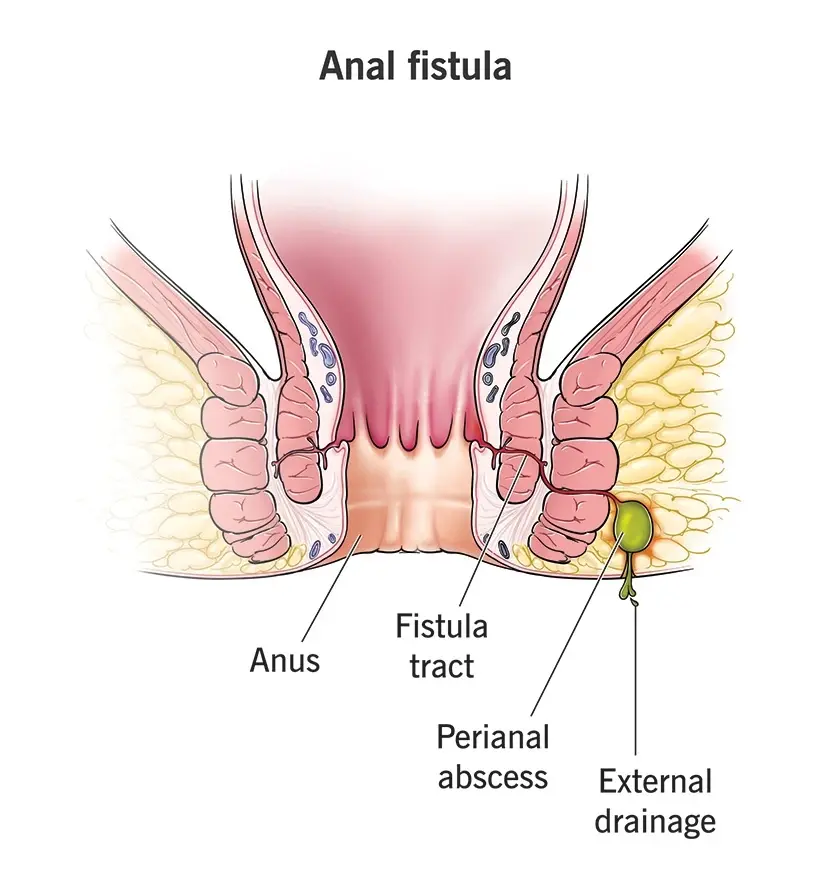
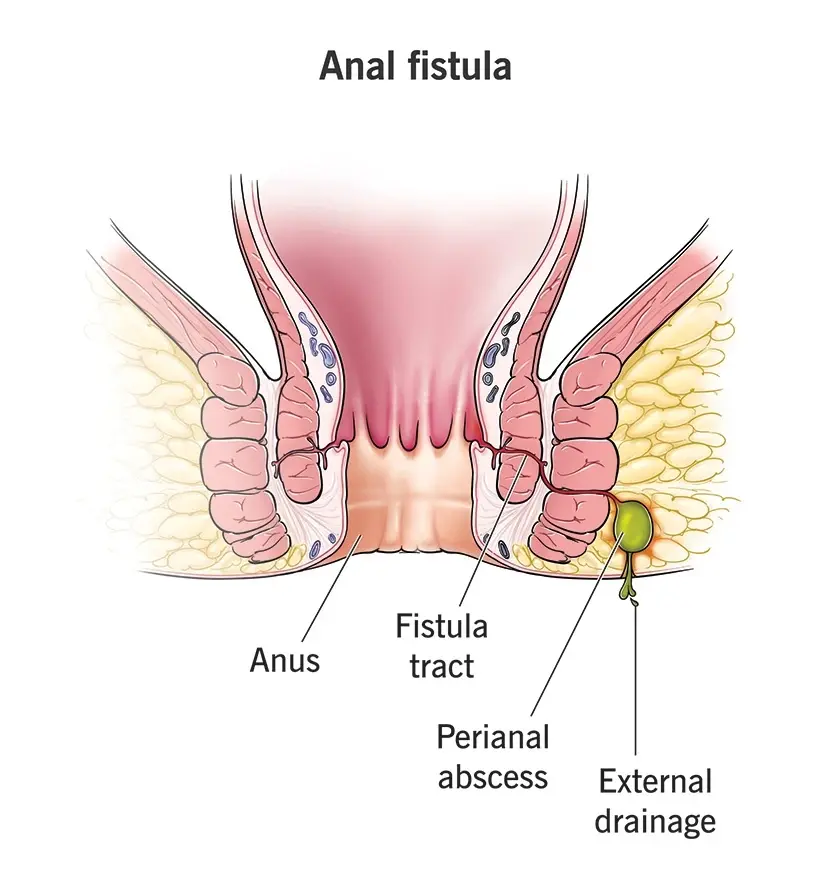
An anal fistula is an abnormal tunnel or connection that develops between the anal canal or rectum and the skin near the anus. It commonly develops after an infection or abscess around the anus has drained but the abnormal passage remains. The condition may cause recurring swelling, pain, irritation, or discharge from an opening near the anus. Some fistulas may remain active for a long time and repeatedly cause infection or drainage. The treatment depends on factors such as the location of the fistula, the length and complexity of the tract, involvement of the anal sphincter muscles, and whether there are associated abscesses.
Symptoms for Fistula
Persistent or Recurring Pain
Pain around the anus that keeps returning
Swelling Near the Anal Opening
Localized swelling that may come and go
Pus or Fluid Discharge
Discharge from an opening near the anus
Blood-Stained Discharge
Blood mixed with the discharge in some cases
Repeated Abscess Formation
Abscesses that form again after healing
Skin Irritation
Irritation of the skin around the anus
An External Opening
A visible opening on the skin near the anus
Pain When Sitting or Passing Stool
Pain that increases while sitting or defecating
Foul-Smelling Discharge
Discharge with an unpleasant odour
Common Causes of Fistula
Previous Anal Abscess
The most common cause of an anal fistula
Infection of an Anal Gland
Infection spreading from an anal gland
Inadequately Healed Abscess
A perianal abscess that drained but left a tract
Crohn's Disease
Inflammatory bowel disease affecting the anal region
Inflammatory Bowel Conditions
Certain bowel conditions predispose to fistulas
Previous Anorectal Surgery
Earlier surgery in the anal region
Trauma to the Anal Region
Direct injury to the anal area
Certain Infections
Specific infections can create abnormal tracts
Risk Factors for Fistula
Previous Anal or Perianal Abscess
The strongest risk factor for a fistula
Recurrent Infections
Repeated infections around the anus
Inflammatory Bowel Disease
Conditions such as Crohn's disease
Previous Anorectal Surgery
Earlier operations in the anal region
Immune-Related Conditions
Conditions that reduce infection resistance
History of Recurrent Fistula
A fistula that has returned before
Poor Wound Healing
Delayed healing keeps the tract open
Complications if Fistula Left Untreated
Recurrent Anal Abscess
Abscesses forming again along the tract
Persistent Pain and Discomfort
Ongoing pain affecting daily activities
Continuous Discharge
Continuous or recurring drainage
Skin Irritation
Chronic irritation from persistent discharge
Spread of Local Infection
Infection extending into surrounding tissue
Additional Fistula Tracts
New branching tracts forming over time
Difficulty with Bowel Movements
Discomfort while passing stool in some cases
Recurring Inflammation
Repeated inflammation around the anus
Diagnosis
A doctor usually diagnoses an anal fistula through a detailed medical history and physical examination of the anal and surrounding area. The surgeon may look for an external opening, swelling, discharge, or signs of a previous abscess. For complex, recurrent, or deeper fistulas, additional imaging may be recommended to identify the complete fistula tract and understand its relationship with the anal sphincter muscles.
Diagnostic Methods
- Physical examination
- Digital rectal examination when appropriate
- Proctoscopy or anoscopy
- MRI pelvis for complex fistulas
- Endoanal ultrasound in selected cases
- Additional investigations when an underlying condition is suspected
Surgical Treatment Options
Our advanced surgical procedures provide effective, long-term relief
Fistulotomy
Fistulotomy is a commonly used surgical treatment for selected anal fistulas. The surgeon opens the fistula tract along its length to allow it to heal gradually from the inside.
Recovery Time
As advised by the surgeon
Anesthesia
Regional or general
Laser-Assisted Fistula Treatment
Laser-assisted treatment may be considered for selected fistulas as a minimally invasive approach. A laser fibre is introduced into the fistula tract to help treat and close the abnormal passage.
Recovery Time
As advised by the surgeon
Anesthesia
Regional or general
Seton Treatment
A seton is a surgical thread or material placed through the fistula tract in selected cases, particularly when the tract involves a significant portion of the anal sphincter.
Recovery Time
Further treatment may be required depending on the case
Anesthesia
Regional or general
Sphincter-Preserving Procedures
For fistulas involving important portions of the anal sphincter, procedures designed to preserve sphincter function may be considered.
Recovery Time
Depends on the procedure performed
Anesthesia
Regional or general
Fistulotomy
Fistulotomy is a commonly used surgical treatment for selected anal fistulas. The surgeon opens the fistula tract along its length to allow it to heal gradually from the inside.
Recovery Time
As advised by the surgeon
Anesthesia
Regional or general
Laser-Assisted Fistula Treatment
Laser-assisted treatment may be considered for selected fistulas as a minimally invasive approach. A laser fibre is introduced into the fistula tract to help treat and close the abnormal passage.
Recovery Time
As advised by the surgeon
Anesthesia
Regional or general
Seton Treatment
A seton is a surgical thread or material placed through the fistula tract in selected cases, particularly when the tract involves a significant portion of the anal sphincter.
Recovery Time
Further treatment may be required depending on the case
Anesthesia
Regional or general
Sphincter-Preserving Procedures
For fistulas involving important portions of the anal sphincter, procedures designed to preserve sphincter function may be considered.
Recovery Time
Depends on the procedure performed
Anesthesia
Regional or general
Preventive Measures
Treat Anal Abscesses Promptly
Timely treatment reduces the risk of a fistula forming.
Maintain Good Anal Hygiene
Keep the area clean and dry.
Do Not Ignore Swelling or Discharge
Recurring symptoms need medical review.
Maintain Healthy Bowel Habits
Regular, easy bowel movements protect the anal canal.
Manage Constipation and Diarrhoea
Treat both promptly and appropriately.
Follow Advice for Bowel Conditions
Stay on treatment for inflammatory bowel conditions.
Attend Follow-Up Appointments
Reviews after treatment help detect recurrence early.
Fistula Types and Surgical Procedures
Simple Anal Fistula
Description: A simple fistula generally has a straightforward tract and limited involvement of the anal sphincter.
Surgical Procedure: Fistulotomy - Or another suitable procedure after specialist evaluation.
Complex Anal Fistula
Description: A complex fistula may have multiple tracts, deeper extension, recurrent disease, or greater involvement of the anal sphincter.
Surgical Procedure: Sphincter-Preserving Procedures - Seton, laser-assisted or other surgical approaches.
High Anal Fistula
Description: A high fistula is located higher in relation to the anal canal and may involve a greater portion of the sphincter muscles.
Surgical Procedure: Anatomy-Led Approach - Selected to preserve sphincter function.
Recurrent Anal Fistula
Description: A recurrent fistula develops again after previous treatment or continues to have an active tract.
Surgical Procedure: Detailed Evaluation - Identifies the remaining or new tract before further treatment.
Why choose Total Surgicare for Fistula Surgery?
Advanced Treatment Options
Minimally invasive and surgical approaches based on the fistula's characteristics.
Experienced Proctology Team
Specialized evaluation and treatment of anorectal conditions.
Personalized Treatment Planning
Treatment selected according to fistula location, complexity, and sphincter involvement.
Post-Treatment Guidance
Support with wound care, bowel habits, recovery, and follow-up.
FAQS
Frequently Asked Questions — Fistula
Answers to common questions about fistula at Total Surgicare.
Need Help?
If you can't find the answer to your question, please don't hesitate to contact our customer support team.