Inguinal Hernia Treatment – Laparoscopic Hernia Repair
Inguinal hernia occurs when tissue pushes through a weak spot in the groin muscles. We offer advanced laparoscopic hernia repair for quick recovery and minimal discomfort.
Minimally Invasive
Advanced techniques with minimal pain
Modern Technology
State-of-the-art equipment
Expert Doctors
Specialized in treatment
Quick Recovery
Return to normal activities fast
Also Known As:
इंगुइनल हर्निया (Hindi)इन्ग्वायनल हर्निया (Marathi)
Scroll for more information
Book an Appointment
What is Inguinal Hernia?
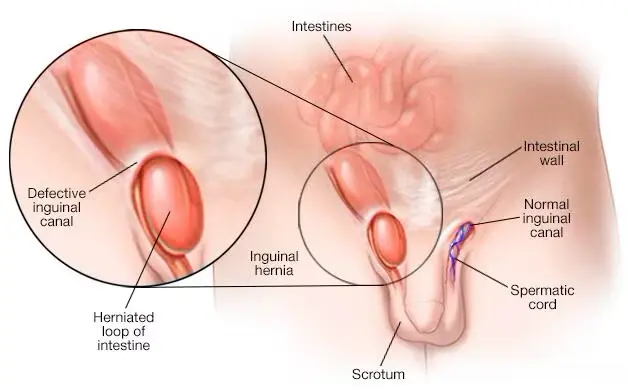
An inguinal hernia is a bulge that occurs in the groin region when tissue, such as part of the intestine, protrudes through a weak spot in the abdominal muscles. It can be painful, especially during coughing or lifting heavy objects.
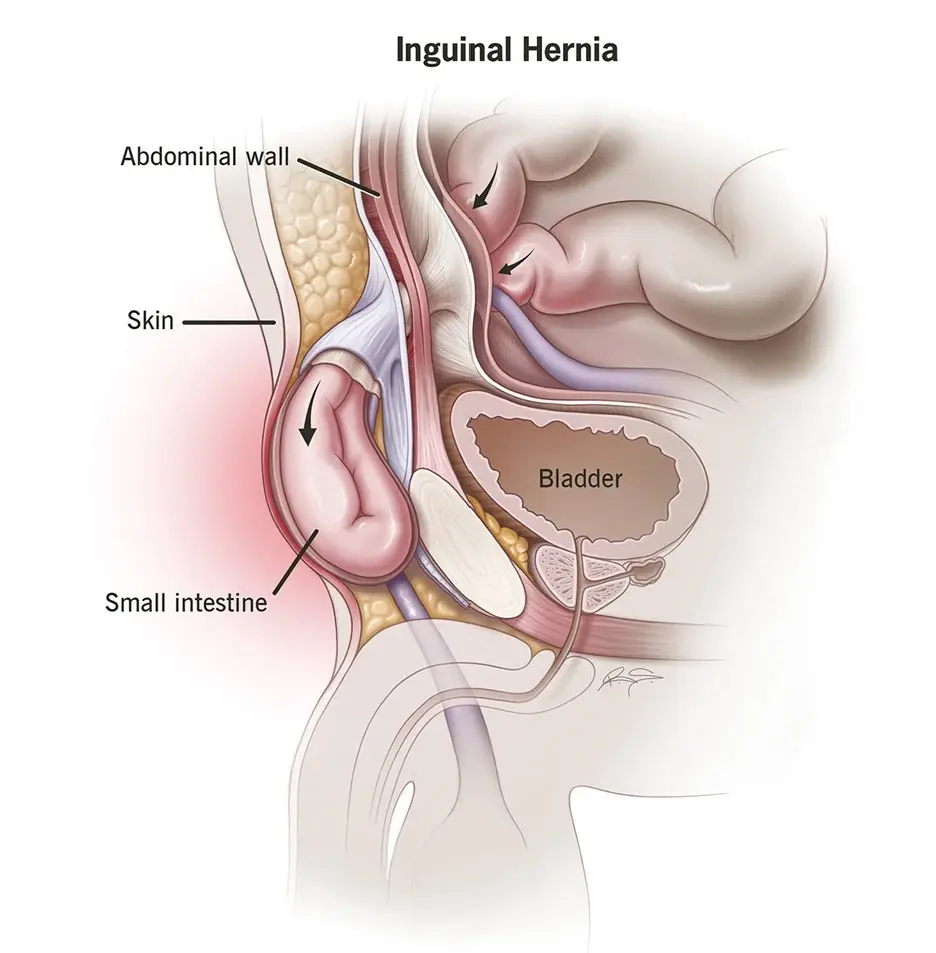
Symptoms for Inguinal Hernia
Bulge in Groin
Visible and possibly painful bulge in lower abdomen
Pain When Bending or Lifting
Discomfort during physical activity
Heaviness in Groin
Feeling of dragging or heaviness
Swelling Around Testicles
In men, hernia may extend into the scrotum
Burning or Aching Sensation
At the bulge site, especially after standing
Nausea or Vomiting
If the hernia becomes strangulated
Common Causes of Inguinal Hernia
Weak Abdominal Wall
Congenital or age-related weakness in groin area
Heavy Lifting
Can cause sudden strain in the groin
Chronic Coughing
Increases pressure in abdominal cavity
Obesity
Increases strain on abdominal muscles
Straining During Bowel Movements
Leads to excessive pressure on the abdomen
Previous Surgery
May weaken muscle or cause scar tissue
Risk Factors for Inguinal Hernia
Male Gender
More common in men due to anatomy
Family History
Genetic predisposition to weak muscles
Chronic Constipation
Frequent straining during bowel movements
Smoking
Leads to chronic coughing and muscle weakness
Premature Birth
Underdeveloped muscles increase risk
Heavy Physical Labor
Jobs involving lifting and straining
Complications if Inguinal Hernia Left Untreated
Strangulated Hernia
Blood supply to herniated tissue is cut off
Incarcerated Hernia
Hernia becomes trapped and cannot be pushed back
Bowel Obstruction
Trapped intestine may cause blockage
Infection
Especially in strangulated cases
Recurrence
Can recur if not properly repaired
Testicular Damage
In men if blood supply is affected
Diagnosis
Diagnosis is usually clinical, confirmed by physical exam and imaging if needed.
Diagnostic Methods
- Physical Examination (detect bulge)
- Ultrasound (to confirm and check severity)
- MRI or CT Scan (in complex or recurrent cases)
Surgical Treatment Options
Our advanced surgical procedures provide effective, long-term relief
Recommended
Laparoscopic Hernia Repair
Minimally invasive surgery using small incisions and mesh placement
Quick recovery
Minimal pain
Lower recurrence rate
Recovery Time
1–2 weeks
Anesthesia
General
Open Hernia Repair (Hernioplasty)
Traditional surgery involving larger incision and mesh placement
Suitable for large or complex hernias
Effective in emergency cases
Recovery Time
2–4 weeks
Anesthesia
Local/General
Robotic-Assisted Hernia Repair
Advanced minimally invasive surgery using robotic instruments for precise mesh placement
Improved precision and control
Reduced postoperative pain
Faster return to normal activities
Recovery Time
1–2 weeks
Anesthesia
General
Recommended
Laparoscopic Hernia Repair
Minimally invasive surgery using small incisions and mesh placement
Quick recovery
Minimal pain
Lower recurrence rate
Recovery Time
1–2 weeks
Anesthesia
General
Open Hernia Repair (Hernioplasty)
Traditional surgery involving larger incision and mesh placement
Suitable for large or complex hernias
Effective in emergency cases
Recovery Time
2–4 weeks
Anesthesia
Local/General
Robotic-Assisted Hernia Repair
Advanced minimally invasive surgery using robotic instruments for precise mesh placement
Improved precision and control
Reduced postoperative pain
Faster return to normal activities
Recovery Time
1–2 weeks
Anesthesia
General
Preventive Measures
Watchful Waiting
For small hernias without symptoms, regular monitoring is an option
Truss or Hernia Belt
Supports the bulge temporarily but is not a permanent solution
Lifestyle Modifications
Includes avoiding heavy lifting, managing weight, and treating chronic cough or constipation to reduce hernia strain
Physical Therapy
Guided exercises to strengthen abdominal muscles, potentially reducing hernia discomfort in select cases
Inguinal Hernia Types and Surgical Procedures
Indirect Inguinal Hernia
Description: Congenital; follows the path of the inguinal canal
Surgical Procedure: Laparoscopic or open repair
Direct Inguinal Hernia
Description: Develops over time due to weakened muscles
Surgical Procedure: Mesh-based hernioplasty
Incarcerated Hernia
Description: Stuck in the groin, requires immediate surgery
Surgical Procedure: Open surgical repair