AV Fistula - Symptoms, Causes & Treatment
An arteriovenous (AV) fistula is an abnormal connection between an artery and a vein, often created surgically for hemodialysis access. Learn about its symptoms, causes, and treatments.
Minimally Invasive
Advanced techniques with minimal pain
Modern Technology
State-of-the-art equipment
Expert Doctors
Specialized in treatment
Quick Recovery
Return to normal activities fast
Also Known As:
एवी फिस्टुला (Hindi)एव्ही फिस्टुला (Marathi)
Scroll for more information
Book an Appointment
What is an AV Fistula?
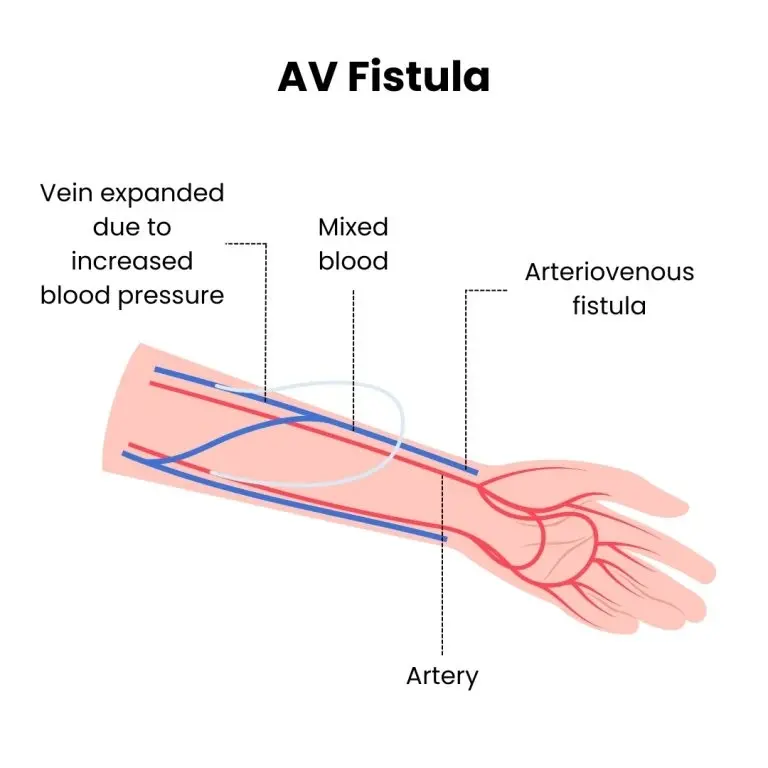
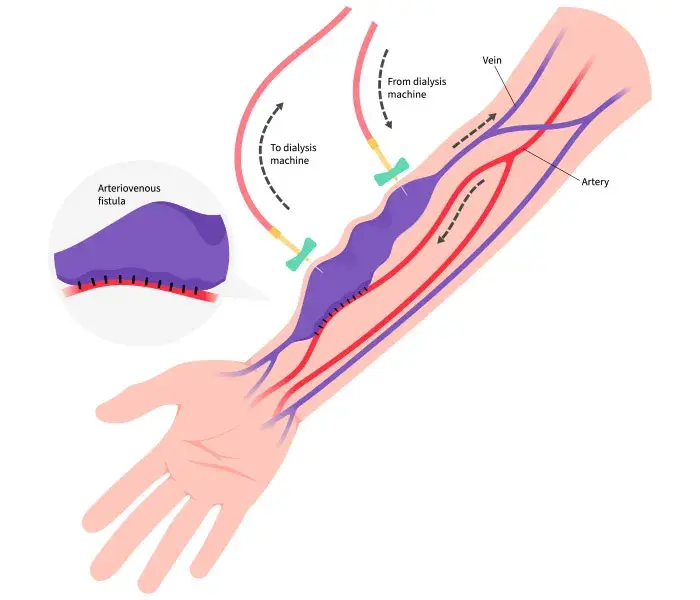
An AV fistula is a direct connection between an artery and a vein, either congenital, traumatic, or surgically created to provide access for dialysis.
Trigger Foods to Avoid in a Diet
High-Sodium Foods
May increase blood pressure, affecting fistula function.
High-Phosphorus Foods
Can strain kidneys and impact dialysis effectiveness.
Common Causes of AV Fistula
Surgical Creation
Deliberate connection made between artery and vein for dialysis access.
Trauma or Injury
Accidental connection due to injury.
Congenital Defect
Rarely, fistulas form before birth.
Risk Factors for AV Fistula
Chronic Kidney Disease
Most common indication for surgical AV fistula.
Diabetes
Increases risk of vascular complications.
High Blood Pressure
Can affect fistula durability.
Smoking
Impairs blood vessel health.
Complications if AV Fistula Left Untreated
Infection
Risk at surgical site.
Thrombosis
Blood clot blocking fistula.
Steal Syndrome
Reduced blood flow to the hand causing pain or numbness.
Diagnosis
Diagnosis through physical exam, ultrasound imaging, and blood flow studies.
Diagnostic Methods
- Physical Examination
- Doppler Ultrasound
- Angiography
Surgical Treatment Options
Our advanced surgical procedures provide effective, long-term relief
Recommended
AV Fistula Creation
Surgical connection of an artery to a vein to enable dialysis access.
Reliable long-term vascular access
Lower infection risk compared to catheters
Improved dialysis efficiency
Durable and cost-effective
Recovery Time
4-6 weeks
Anesthesia
Local or General
Revision Surgery
Surgery to fix fistula complications like narrowing or thrombosis.
Restores fistula function
Prevents clot formation
Improves blood flow
Recovery Time
2-3 weeks
Anesthesia
Local or General
Endovascular Fistula Creation
Minimally invasive procedure using a catheter to create the fistula without open surgery.
Less invasive with smaller incisions
Faster healing and fewer complications
Outpatient procedure possible
Recovery Time
2-4 weeks
Anesthesia
Local
Recommended
AV Fistula Creation
Surgical connection of an artery to a vein to enable dialysis access.
Reliable long-term vascular access
Lower infection risk compared to catheters
Improved dialysis efficiency
Durable and cost-effective
Recovery Time
4-6 weeks
Anesthesia
Local or General
Revision Surgery
Surgery to fix fistula complications like narrowing or thrombosis.
Restores fistula function
Prevents clot formation
Improves blood flow
Recovery Time
2-3 weeks
Anesthesia
Local or General
Endovascular Fistula Creation
Minimally invasive procedure using a catheter to create the fistula without open surgery.
Less invasive with smaller incisions
Faster healing and fewer complications
Outpatient procedure possible
Recovery Time
2-4 weeks
Anesthesia
Local
Preventive Measures
Monitoring
Regular checkups to assess fistula function.
Medication
To manage blood pressure or prevent clotting.
Physical Therapy
Exercises and limb massage to promote blood flow and prevent stiffness around the fistula.
Anticoagulant Therapy
Use of blood thinners to reduce the risk of clotting in the fistula without surgery.
Why choose Total Surgicare for AV Fistula Surgery?
0
Expert Vascular Surgeons
Specialized in fistula creation and maintenance.
1
Advanced Imaging Techniques
Precise mapping for successful surgery.
2
Postoperative Care
Comprehensive follow-up to ensure fistula patency.
3
Patient Education
Guidance on fistula care and monitoring.