Cataract - Symptoms, Causes & Treatment
Cataract is a clouding of the eye's natural lens leading to blurred vision. Learn about its symptoms, causes, and treatment options.
Minimally Invasive
Advanced techniques with minimal pain
Modern Technology
State-of-the-art equipment
Expert Doctors
Specialized in treatment
Quick Recovery
Return to normal activities fast
Also Known As:
धुंधला मोती (Hindi)मोतिबिंदू (Marathi)
Scroll for more information
Book an Appointment
What is Cataract?
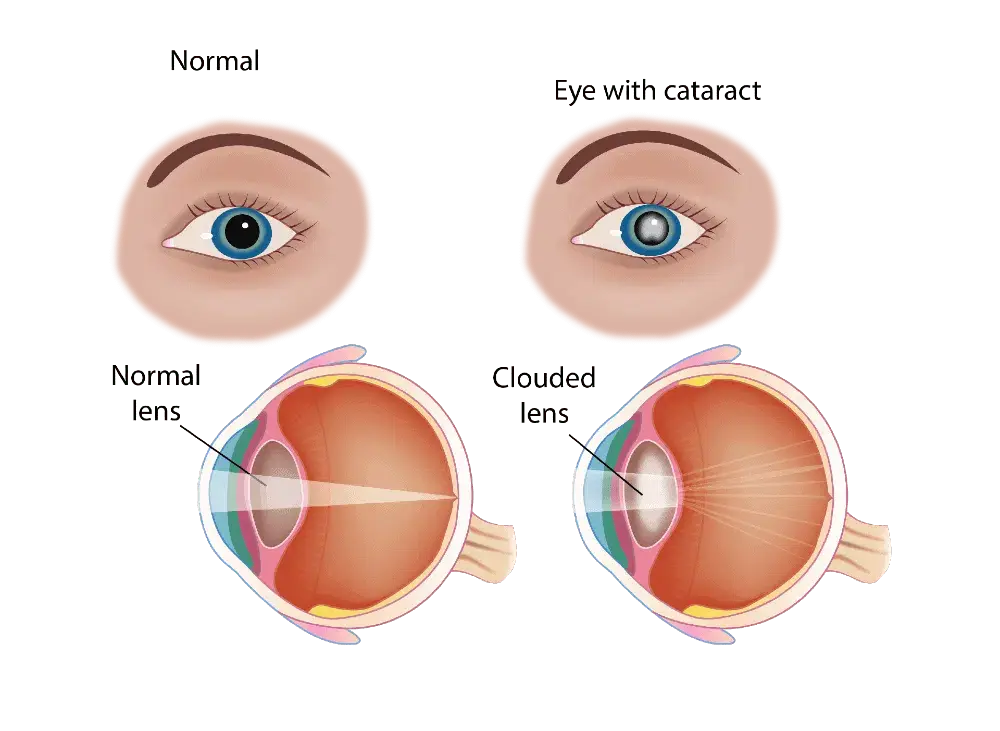
Cataract is the clouding of the normally clear lens of the eye, resulting in decreased vision and possible blindness if untreated.
Trigger Foods to Avoid in a Diet
High Sugar Foods
May accelerate cataract development, especially in diabetics.
Excessive Alcohol
Linked to increased risk of cataract formation.
Symptoms for Cataract
Blurred or Cloudy Vision
Difficulty seeing clearly.
Difficulty Seeing at Night
Poor vision in low light conditions.
Glare or Halos Around Lights
Sensitivity to bright lights.
Faded Colors
Colors appear less vibrant.
Common Causes of Cataract
Aging
Natural lens changes with age cause cataracts.
Diabetes
High blood sugar damages lens proteins.
Eye Injury
Trauma can cause early cataract formation.
Prolonged Sun Exposure
UV radiation accelerates lens clouding.
Risk Factors for Cataract
Age Over 60
Most common age group for cataracts.
Diabetes
Increases cataract risk.
Smoking
Contributes to lens damage.
Excessive UV Exposure
Risk factor for lens clouding.
Complications if Cataract Left Untreated
Vision Loss
If untreated, cataracts can cause blindness.
Difficulty Performing Daily Tasks
Affects quality of life.
Diagnosis
Eye examination including visual acuity tests, slit-lamp examination, and retinal exam.
Diagnostic Methods
- Visual Acuity Test
- Slit-Lamp Examination
- Retinal Exam
Surgical Treatment Options
Our advanced surgical procedures provide effective, long-term relief
Recommended
Cataract Surgery
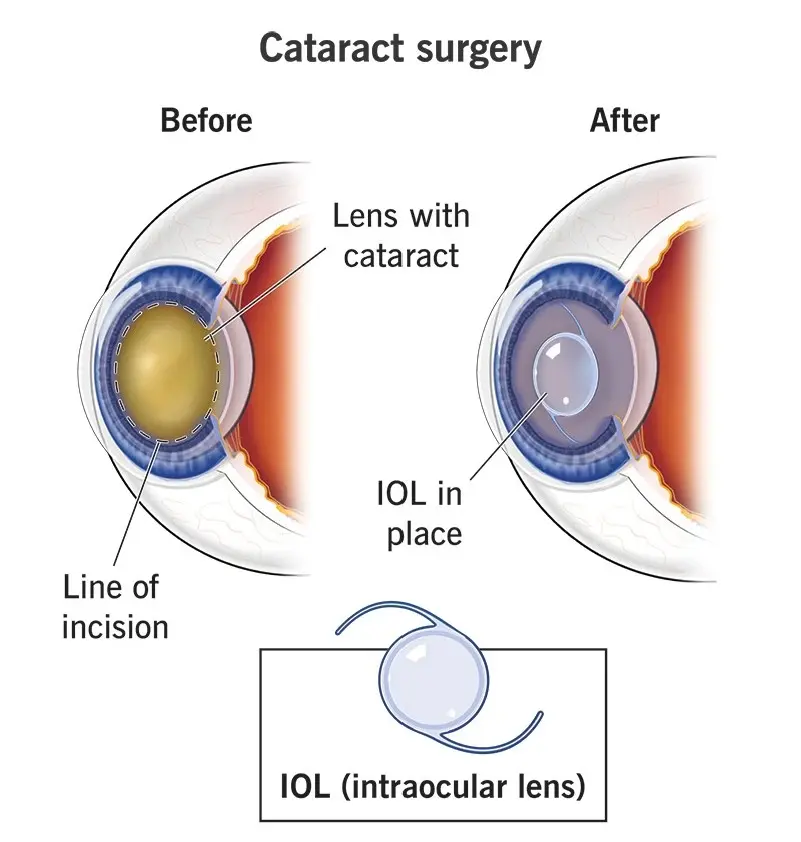
Removal of cloudy lens and replacement with artificial intraocular lens (IOL).
Restores clear vision
Quick recovery
High success rate
Improves quality of life
Recovery Time
1-2 weeks
Anesthesia
Local
Femtosecond Laser-Assisted Cataract Surgery (FLACS)
Laser technology used to perform precise incisions and soften the lens before removal.
Highly precise
Reduced ultrasound energy needed
Potentially faster healing
Improved surgical outcomes
Recovery Time
1-2 weeks
Anesthesia
Topical or Local
Intracapsular Cataract Extraction (ICCE)
Complete removal of the lens and capsule in one piece, rare but used in complicated cases.
Useful when lens capsule is damaged
Allows implantation of special IOLs
Effective in traumatic cataracts
Recovery Time
3-6 weeks
Anesthesia
General
Recommended
Cataract Surgery
Removal of cloudy lens and replacement with artificial intraocular lens (IOL).
Restores clear vision
Quick recovery
High success rate
Improves quality of life
Recovery Time
1-2 weeks
Anesthesia
Local
Femtosecond Laser-Assisted Cataract Surgery (FLACS)
Laser technology used to perform precise incisions and soften the lens before removal.
Highly precise
Reduced ultrasound energy needed
Potentially faster healing
Improved surgical outcomes
Recovery Time
1-2 weeks
Anesthesia
Topical or Local
Intracapsular Cataract Extraction (ICCE)
Complete removal of the lens and capsule in one piece, rare but used in complicated cases.
Useful when lens capsule is damaged
Allows implantation of special IOLs
Effective in traumatic cataracts
Recovery Time
3-6 weeks
Anesthesia
General
Preventive Measures
Eyeglasses or Contact Lenses
May improve vision in early cataracts.
Lifestyle Changes
Reducing glare and wearing sunglasses.
Anti-glare Coated Glasses
Special lenses to reduce glare and improve contrast in mild cataracts.
Nutritional Supplements
Antioxidants like Vitamin C, E, lutein, and zeaxanthin may slow cataract progression.
Cataract Types and Surgical Procedures
Nuclear Cataract
Description: Forms in the central zone (nucleus) of the lens.
Surgical Procedure: Typically treated with standard cataract surgery.
Cortical Cataract
Description: Affects the edges (cortex) of the lens with white opacities.
Surgical Procedure: Surgical removal recommended when vision is affected.
Posterior Subcapsular Cataract
Description: Forms at the back of the lens and can affect near vision.
Surgical Procedure: Often removed surgically for symptom relief.
Why choose Total Surgicare for Cataract Surgery?
0
Experienced Ophthalmologists
Specialists trained in advanced cataract surgery.
1
State-of-the-Art Facilities
Modern surgical equipment for safe procedures.
2
Comprehensive Eye Care
Pre- and post-operative care for best outcomes.
3
Patient-Centered Approach
Customized treatment plans tailored to patient needs.