Best Gallstone Surgery in Mumbai with Advanced Laparoscopic Treatment
Looking for gallstone surgery in Mumbai? Total Surgicare provides surgical treatment for symptomatic gallstones using modern laparoscopic techniques. Laparoscopic gallbladder surgery uses small incisions and can help reduce surgical trauma, post-operative discomfort, and recovery time compared with traditional open surgery in suitable patients.
Laparoscopic Surgery
Minimally invasive surgical approach
Small Incisions
Smaller surgical openings compared with traditional surgery
Experienced Surgeons
Specialized surgical care
Recovery Support
Post-operative guidance and follow-up
Also Known As:
Book an Appointment
What are Gallstones?
Gallstones are hardened deposits that develop inside the gallbladder when substances present in bile, such as cholesterol or bilirubin, become concentrated and form solid particles. They can vary in size, from very small deposits to larger stones. Some people may have gallstones without experiencing any symptoms, while others can develop repeated pain or digestive discomfort when the stones interfere with the normal flow of bile. When a gallstone blocks the opening of the gallbladder or bile duct, it can cause upper abdominal pain, particularly after meals, along with nausea, vomiting, bloating, or indigestion. In some cases, blockage may lead to inflammation, infection, jaundice, or other complications.
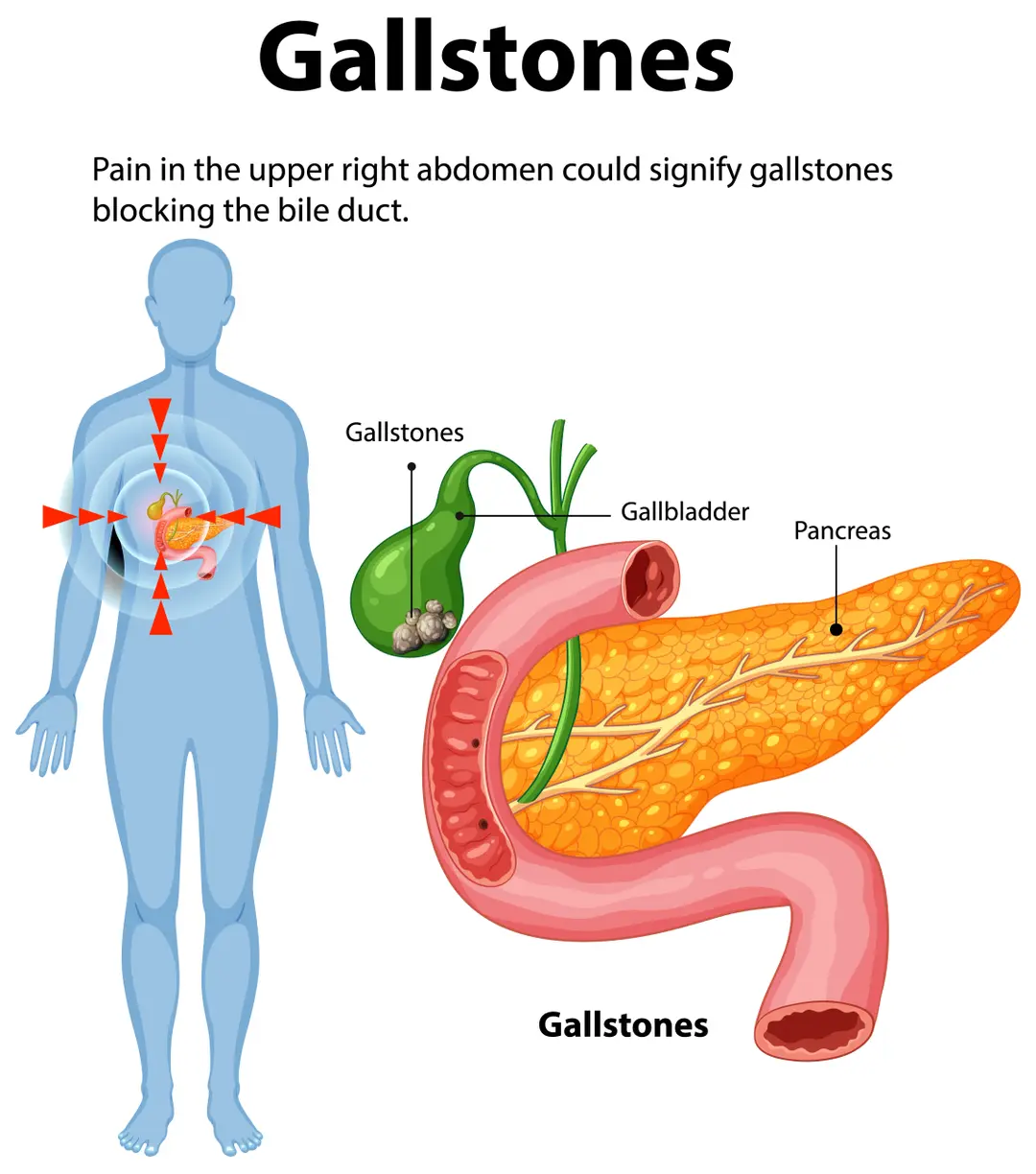
Symptoms for Gallstone
Upper Abdominal Pain
Pain in the upper right or upper middle abdomen
Pain After Fatty Meals
Discomfort that follows heavy or oily food
Pain Spreading to Back or Shoulder
Pain that radiates towards the back or right shoulder
Nausea
Feeling sick, often alongside the pain
Vomiting
Vomiting during painful episodes
Indigestion or Bloating
Persistent fullness, gas or indigestion
Fever
Fever in cases associated with infection
Yellowing of Eyes or Skin
Jaundice when bile flow is obstructed
Common Causes of Gallstone
Obesity or Being Overweight
Raises cholesterol levels in bile
Rapid Weight Loss
Crash dieting alters bile composition
High-Fat Dietary Patterns
Diets high in fat and low in fibre
Family History
Gallstones can run in families
Pregnancy
Hormonal changes affect gallbladder emptying
Increasing Age
Risk rises steadily with age
Certain Medical Conditions
Some conditions predispose to stone formation
Reduced Gallbladder Emptying
Bile that sits too long can form crystals
Complications if Gallstone Left Untreated
Gallbladder Inflammation
Cholecystitis caused by a blocked gallbladder
Bile Duct Obstruction
A stone blocking the common bile duct
Jaundice
Yellowing of the skin and eyes
Gallbladder Infection
Infection developing behind the obstruction
Pancreatitis
Inflammation of the pancreas
Recurrent Abdominal Pain
Repeated painful attacks over time
Diagnosis
Gallstones are commonly evaluated using imaging and laboratory tests.
Diagnostic Methods
- Abdominal ultrasound
- Blood tests
- Liver function tests
- CT scan when required
- MRCP for suspected bile duct stones
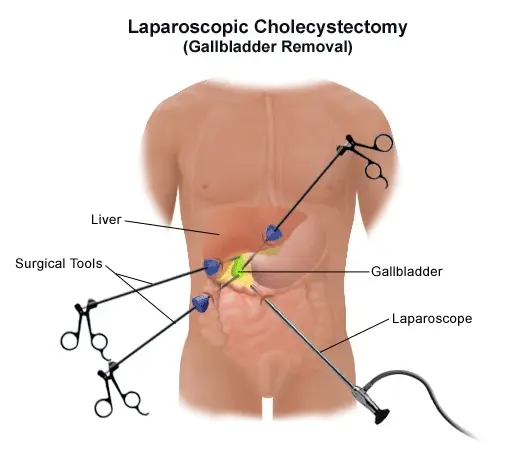
Surgical Treatment Options
Our advanced surgical procedures provide effective, long-term relief
Laparoscopic Cholecystectomy
Laparoscopic cholecystectomy involves removing the gallbladder through small abdominal incisions using a camera and specialized surgical instruments.
Recovery Time
As advised by the surgeon
Anesthesia
General
Open Cholecystectomy
Open surgery may be considered when laparoscopic surgery is unsuitable or when there are complicated surgical findings.
Recovery Time
Longer than laparoscopic surgery
Anesthesia
General
ERCP for Bile Duct Stones
ERCP may be recommended when stones have moved into the common bile duct. It can be used to remove obstructing bile duct stones before or around the time of gallbladder surgery.
Recovery Time
Depends on the individual case
Anesthesia
Sedation or general
Laparoscopic Cholecystectomy
Laparoscopic cholecystectomy involves removing the gallbladder through small abdominal incisions using a camera and specialized surgical instruments.
Recovery Time
As advised by the surgeon
Anesthesia
General
Open Cholecystectomy
Open surgery may be considered when laparoscopic surgery is unsuitable or when there are complicated surgical findings.
Recovery Time
Longer than laparoscopic surgery
Anesthesia
General
ERCP for Bile Duct Stones
ERCP may be recommended when stones have moved into the common bile duct. It can be used to remove obstructing bile duct stones before or around the time of gallbladder surgery.
Recovery Time
Depends on the individual case
Anesthesia
Sedation or general
Preventive Measures
Maintain a Healthy Body Weight
Reduces cholesterol saturation in bile.
Avoid Crash Diets
Rapid weight loss raises the risk of stone formation.
Follow a Balanced Diet
Regular, balanced meals support gallbladder emptying.
Include Adequate Dietary Fibre
Fibre supports healthy digestion.
Limit Excessive High-Fat Foods
Cut back on fried and heavily oily food.
Stay Physically Active
Regular activity lowers gallstone risk.
Why choose Total Surgicare for Gallstone Surgery?
Advanced Laparoscopic Surgery
Minimally invasive treatment for suitable patients.
Experienced Surgical Team
Care planned according to the patient's condition.
Modern Surgical Facilities
Access to advanced surgical equipment.
Complete Follow-Up Care
Support from consultation through recovery.
FAQS
Frequently Asked Questions — Gallstone
Answers to common questions about gallstone at Total Surgicare.
Need Help?
If you can't find the answer to your question, please don't hesitate to contact our customer support team.