Best Gallstone Surgery in Pune – Laparoscopic Treatment
Dealing with gallstones and looking for the best surgical care in Pune? Total Surgicare's Wanowarie clinic offers advanced laparoscopic gallstone surgery — a minimally invasive procedure with small incisions, less pain, and a faster return to daily life.
Minimally Invasive
Small keyhole incisions
Modern Technology
Advanced laparoscopic equipment
Expert Surgeons
Specialized in gallbladder surgery
Fast Recovery
Return to routine within a week
Also Known As:
Book an Appointment
What are Gallstones?
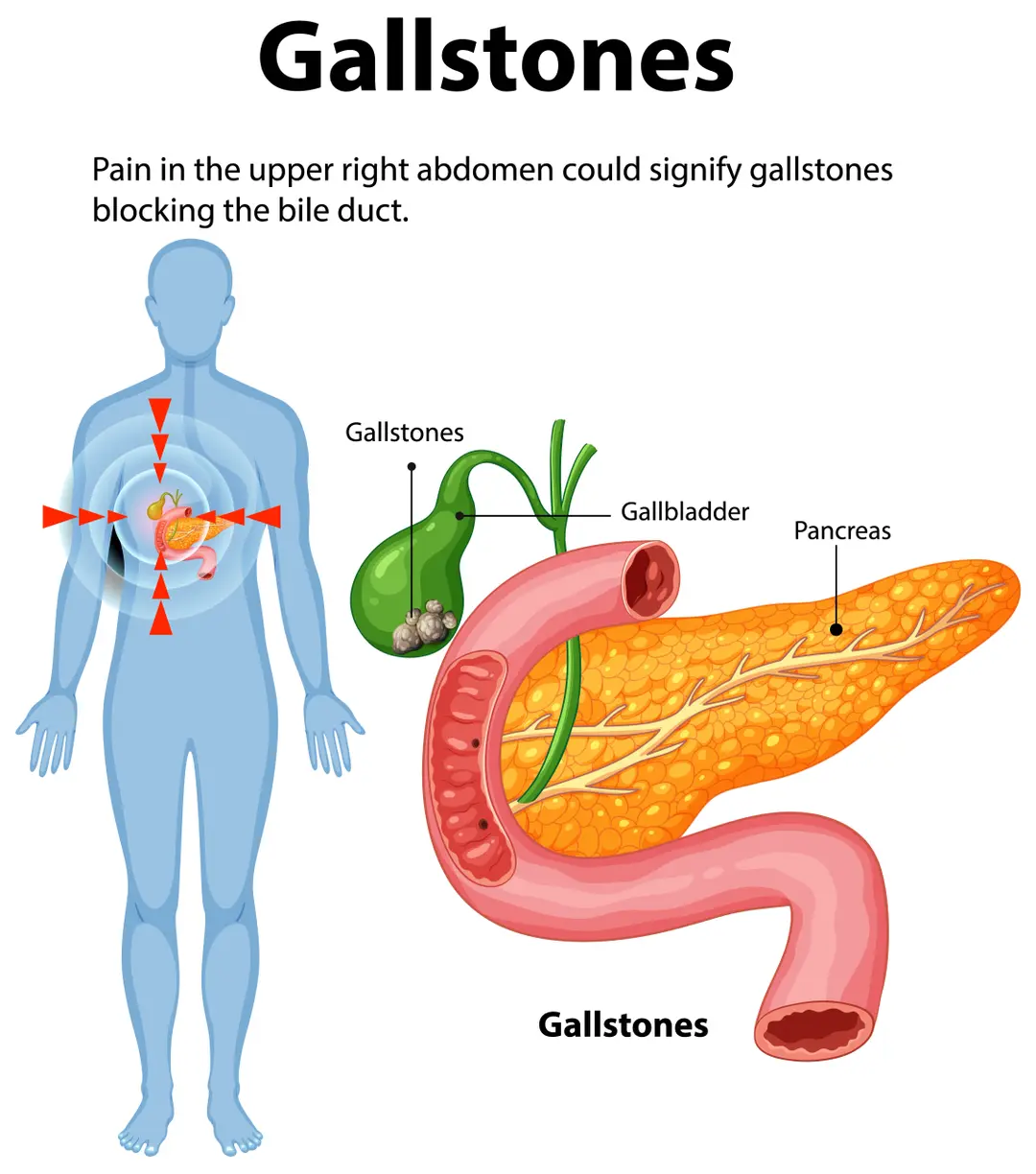
Gallstones are hardened deposits of digestive fluid that form in the gallbladder, a small organ beneath the liver. They can be as small as a grain of sand or as large as a golf ball, and often cause pain when they block bile flow.
Trigger Foods to Avoid in a Diet
Fried and Fatty Foods
Trigger gallbladder contractions and pain
High-Cholesterol Foods
Contribute to stone formation
Refined Carbohydrates
Linked to higher stone risk
Excess Sugar
Associated with increased gallstone risk
Full-Fat Dairy
Can trigger symptoms in sensitive individuals
Processed & Fast Foods
Low fiber, high fat combination
Symptoms for Gallstone
Sudden Upper Abdominal Pain
Especially after fatty meals
Pain Radiating to the Back
Between the shoulder blades
Nausea and Vomiting
Often accompanying an attack
Bloating and Indigestion
Persistent digestive discomfort
Jaundice
Yellowing of skin and eyes if bile duct is blocked
Fever with Chills
Sign of possible infection (cholecystitis)
Common Causes of Gallstone
Excess Cholesterol in Bile
Forms hard cholesterol stones
Excess Bilirubin
Leads to pigment stone formation
Poor Gallbladder Emptying
Bile becomes concentrated
Obesity
Significantly increases risk
Rapid Weight Loss
Disrupts normal bile composition
Hormonal Factors
Pregnancy and estrogen therapy increase risk
Risk Factors for Gallstone
Female Gender
Women are at higher risk, especially during pregnancy
Age Over 40
Risk increases with age
Obesity
Strongly linked to gallstone formation
Family History
Genetic predisposition
Diabetes
Associated with higher gallstone risk
Sedentary Lifestyle
Reduces gallbladder motility
Complications if Gallstone Left Untreated
Acute Cholecystitis
Painful gallbladder inflammation
Bile Duct Blockage
Can cause jaundice and infection
Pancreatitis
Stones blocking the pancreatic duct
Gallbladder Infection
Can become a surgical emergency
Gallbladder Rupture
Rare but life-threatening
Gallbladder Cancer Risk
Slightly elevated with chronic stones
Diagnosis
Diagnosis usually starts with an ultrasound to detect stones, followed by blood tests to check for infection or bile duct involvement if symptoms are severe.
Diagnostic Methods
- Abdominal ultrasound
- Blood tests for liver function and infection markers
- CT scan for complex or unclear cases
- MRCP for suspected bile duct stones
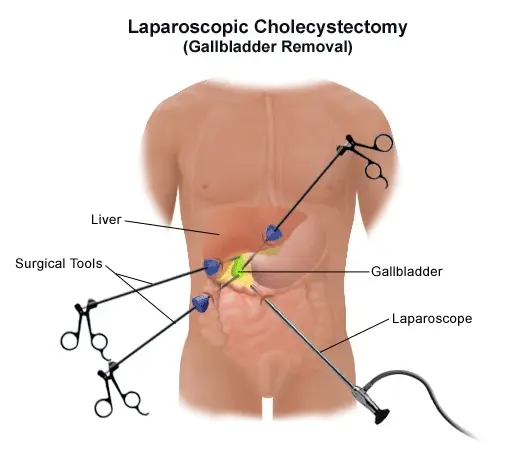
Surgical Treatment Options
Our advanced surgical procedures provide effective, long-term relief
Laparoscopic Cholecystectomy
Minimally invasive keyhole surgery to remove the gallbladder using small incisions and a camera-guided approach.
Recovery Time
5–7 days
Anesthesia
General
Open Cholecystectomy
Traditional surgery through a larger abdominal incision, used for complex or complicated cases.
Recovery Time
3–4 weeks
Anesthesia
General
ERCP (for Bile Duct Stones)
An endoscopic procedure to remove stones blocking the common bile duct, often performed alongside gallbladder removal.
Recovery Time
2–3 days
Anesthesia
Sedation
Laparoscopic Cholecystectomy
Minimally invasive keyhole surgery to remove the gallbladder using small incisions and a camera-guided approach.
Recovery Time
5–7 days
Anesthesia
General
Open Cholecystectomy
Traditional surgery through a larger abdominal incision, used for complex or complicated cases.
Recovery Time
3–4 weeks
Anesthesia
General
ERCP (for Bile Duct Stones)
An endoscopic procedure to remove stones blocking the common bile duct, often performed alongside gallbladder removal.
Recovery Time
2–3 days
Anesthesia
Sedation
Preventive Measures
Maintain a Healthy Weight
Avoid rapid weight loss or gain
Eat a Balanced, Fiber-Rich Diet
Supports healthy digestion
Limit Fried and Fatty Foods
Reduces gallbladder strain
Stay Physically Active
Improves gallbladder motility
Eat Regular Meals
Avoid long gaps that concentrate bile
Stay Hydrated
Supports healthy bile composition
Gallstone Types and Surgical Procedures
Cholesterol Stones
Description: The most common type, forming when bile contains too much cholesterol.
Surgical Procedure: Laparoscopic Cholecystectomy - standard treatment.
Pigment Stones
Description: Dark stones formed from excess bilirubin, often linked to liver disease or blood disorders.
Surgical Procedure: Laparoscopic Cholecystectomy - with evaluation of underlying cause.
Bile Duct Stones (Choledocholithiasis)
Description: Stones that migrate into and block the common bile duct.
Surgical Procedure: ERCP - followed by cholecystectomy.
Complicated Gallstones (Cholecystitis)
Description: Inflamed, infected gallbladder due to stone blockage.
Surgical Procedure: Laparoscopic or Open Cholecystectomy - depending on severity.
Why choose Total Surgicare for Gallstone Surgery?
Advanced Laparoscopic Technique
Small-incision surgery with faster healing and minimal scarring.
FREE Consultation with Experienced Surgeons
8–15 years of specialized experience.
Quick Recovery
Most patients resume normal activity within a week.
End-to-End Insurance Assistance
We handle claims and paperwork for you.
FAQS
Frequently Asked Questions — Gallstone
Answers to common questions about gallstone at Total Surgicare.
Need Help?
If you can't find the answer to your question, please don't hesitate to contact our customer support team.